Gilt Frames for Tavernier paintings
|
||
|
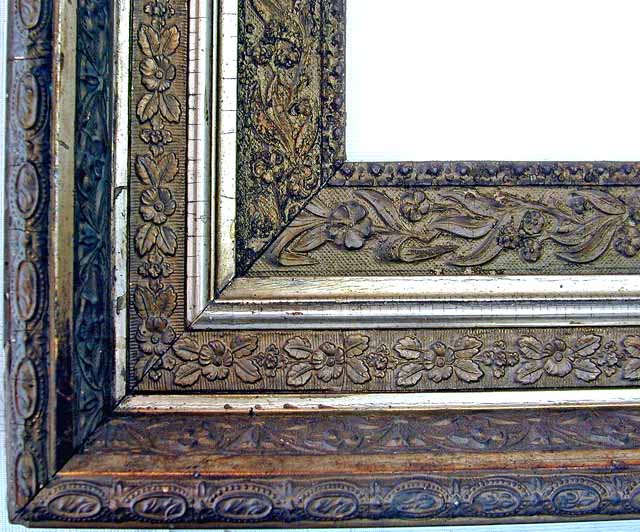
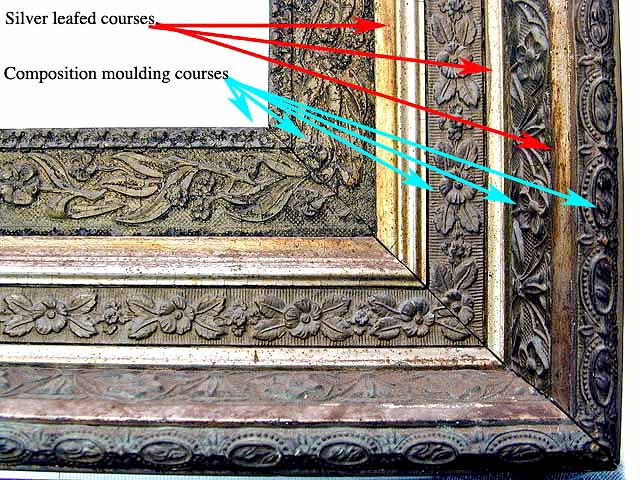
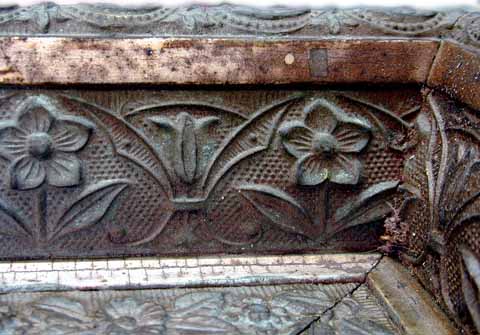
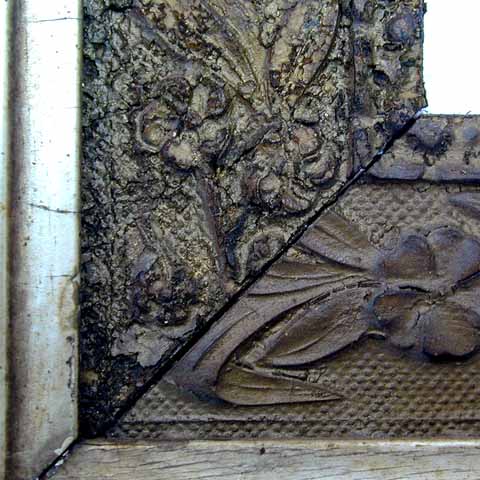
Measuring approximately, overall: 33" x 491/4" x 23/4" Condition: Composition moldings can present several problems not encountered in carved frames. Composition is a plastic material generally composed of whiting (chalk), a hide glue, rosin, and linseed oil. The ingredients are mixed hot and pressed into moulds. The composition is then removed from the mould and transferred and glued onto the frame stock. The stock would be gilded or painted, cut and then assembled into frames. As the composition ages, shrinkage occurs and cracks develop. These can be seen below as the dark parallel lines. These cracks are considered acceptable and the condition is to be expected. Often the stresses caused by the shrinkage will delaminate the composition layer from the wood support. This type of failure is present to varying degrees on some areas of the frame. This condition, if left unaddressed will likely result in further loss (delamination and lifting off) of the composition areas. It was not possible to determine the extent this is occurring due to the "gold" overpaint and limited time for examination. Below are several photographs showing overall condition. Detail of one inside corner as viewed from above.
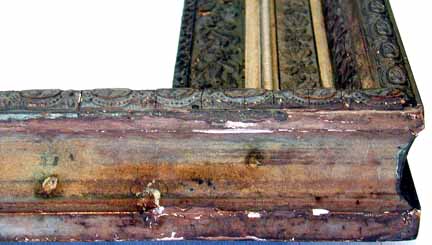
Detail of an outside corner.
|
||
|
|
||
|
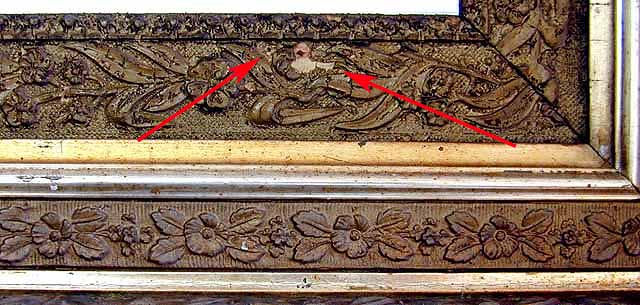
With sections of composition molding chipped away and missing
Close-up of vertical face on inside of frame.
|
||
|
Close-up of thick "gold" overpaint obliterating detail in composition molding.
|
||
|
Recommendations: It would seem inappropriate to use the frame for the display of a painting, in its present condition. You might consider obtaining a reproduction period frame or an antique one in better condition, or treating the existing frame as outlined below. Chemically remove gold and silver paint. Removal of the paint layer(s) will be difficult as most solvent combinations that will attack the oxidized metallic paint film will also have an effect on the underlying composition. Additionally, the silver gilt areas are very sensitive to any solvents containing water. |
||
|